Kaella-Marie Earle
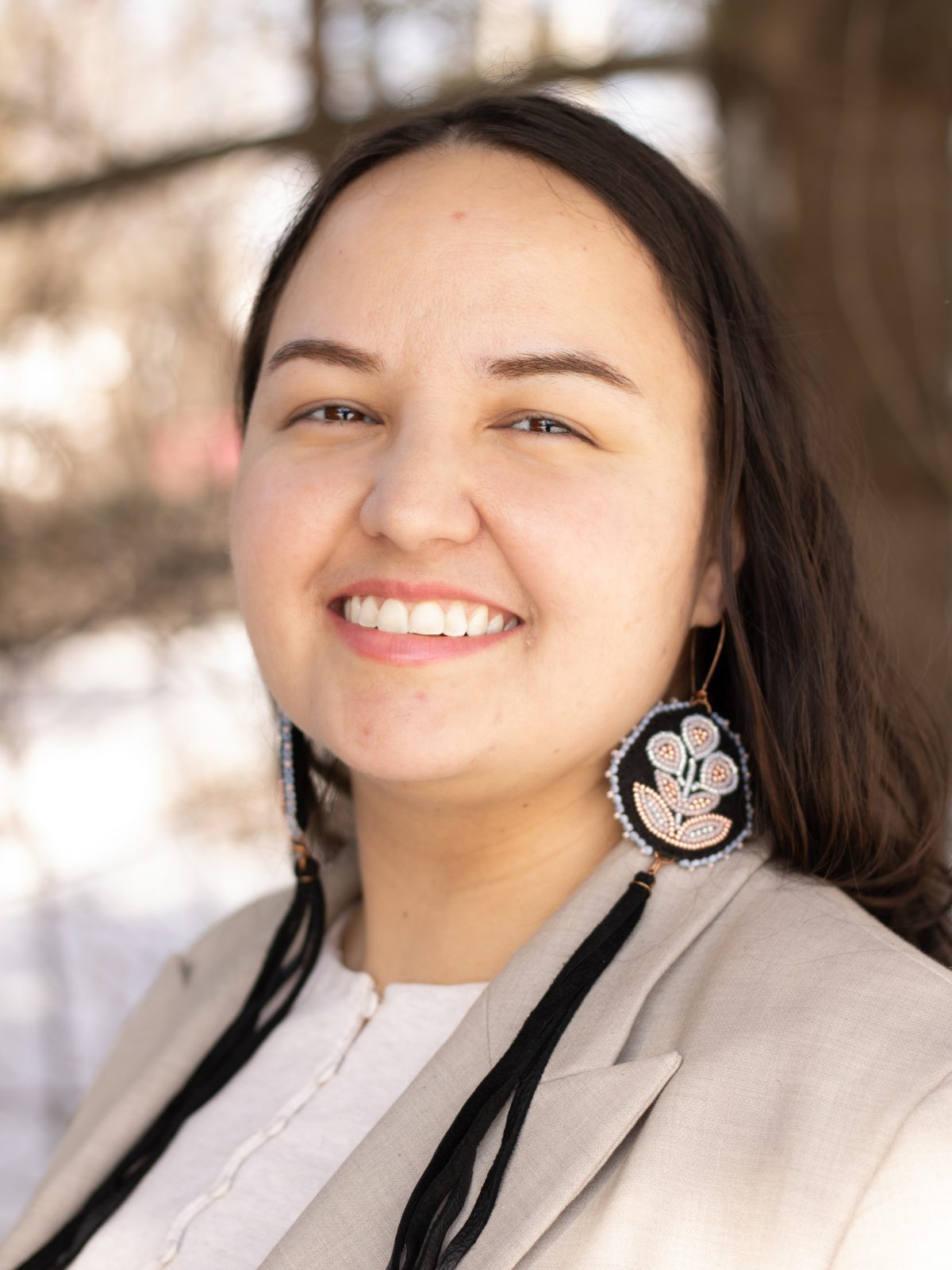
Kaella-Marie Earle, P.Eng., PMP, C.Dir., otherwise known as Waaseyaa (First Light When the Sun Rises) is Anishinaabe from Wiikwemkoong Unceded Territory and Aroland First Nation, and one of Canada’s leading voices at the intersection of net zero economy, Indigenous governance, and workforce strategy. She serves as a Member and Indigenous Committee Chair of the Sustainable Jobs Partnership Council of Canada, advising federal ministers on labour-market readiness, equity, Indigenous justice and economic participation across the net-zero economy. She is also the President of the Canadian Aboriginal Minerals Association (CAMA), advancing Indigenous leadership, regulation, and participation in the mining sector.
Kaella-Marie is a part time professor at Brock University, teaching on energy systems, Indigenous governance and legal traditions, and the future of Canada’s resource economy to engineering students. She is completing a Certificate in Mining Law at Osgoode Hall Law School and pursuing a Master of Energy and Earth Resources Leadership (MEERL) at Queen’s University in the Department of Geological Engineering.
She was honoured in Paris, France in 2025 with the Most Inspiring Woman Award by France Amériques for her leadership in Indigenous rights, sustainable development, and global energy transition.
Her engineering career spans industrial decarbonization, methane-emissions reduction, and major pipeline systems. She formerly worked at Enbridge as an industrial decarbonization engineer and in hydraulic system design engineering for liquid pipelines across Canada and the United States. She designed and co-led strategy for the reduction of methane emissions at Enbridge Gas Storage and Transmission. She also worked in engineering construction field operations, managing storage and transmission expansion projects and the integrity of major natural gas pipelines.
Kaella-Marie additionally serves as Vice-Chairperson of the Indigenous Advisory Committee of the Canada Energy Regulator, working with Indigenous leaders across the country to advise the Board of Directors on the inclusion of Indigenous peoples in energy regulation and the implementation of UNDRIP.
She holds an Advanced Diploma in Chemical Engineering Technology from Cambrian College and a Bachelor of Chemical Engineering from Laurentian University. Her past leadership includes serving on the Indigenous Council of Youth and Elders for the Nuclear Waste Management Organization, Co-Chair of the Indigenous Inclusion Committee for the Young Pipeliners Association of Canada, and multiple roles advancing women’s leadership and Indigenous participation in the energy sector.